Thursday, March 02, 2006

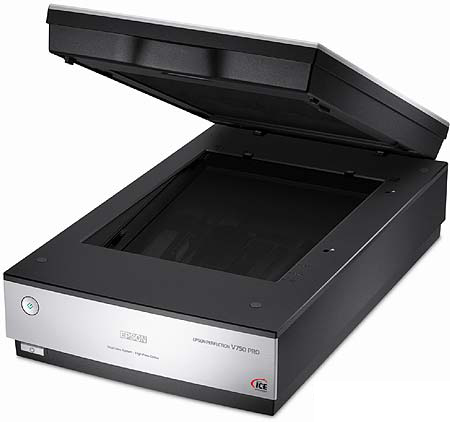
Epson's New Film Flatbed Scanners


Epson introduced two versions of a new state-of-the-art scanner, the V700 Photo and the V750 Pro. They each resolve up to 6,400 DPI, optical! These are dedicated film scanners with unique fluid mount capabilities for photo studio applications. Optimize each scan with the exclusive Dual Lens™ System from Epson™

Cost? $800

Epson Site

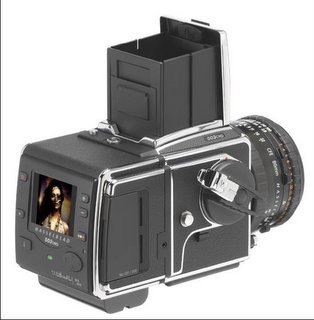
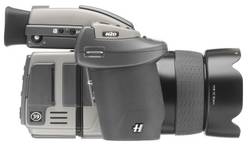
The Hasselblad 503CWD


"Our founder, Victor Hasselblad, was a man of many talents. He was a passionate and dedicated photographer. He was an entrepreneur and businessman. He was an inventor and innovator, and a man who saw the uses of new technology far before most around him. Naturally, Victor didn’t have access to today’s digital technology – no more than Mozart had electric guitars or Leonardo da Vinci had electricity and combustion engines. And just as naturally, we can’t help but ask ourselves what type of camera Victor would have created if he had been around today."

Hasselblad Site
Product Spec Sheet (PDF)

The Genius of Color


Victor Moscoso,Gabriel Orozco and Robert Mangold for Tate, Etc.

I studied with Josef Albers at Yale. No one would ever call him Joe; it was always Mr Albers. He was a nice guy, but you couldn't share a beer with him. He could be very dogmatic and get angry. What was clear was that he was the master and you were the student. I remember one day a student in the class asked him: "Mr Albers, I am confused. Last week you said X, this week you said Y, and they seem to contradict each other," to which Albers immediately replied: "Young lady, in that case you have a choice."

READ ON

PMA 2006


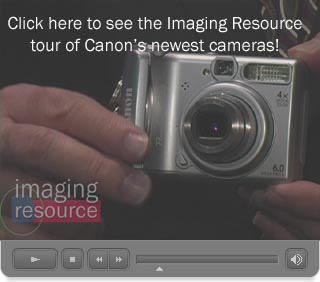
Lots of videos and information on the show at the Imaging Resource

Imaging Resource

Tuesday, February 28, 2006

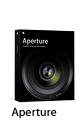
RAW processing improved in Aperture 1.1


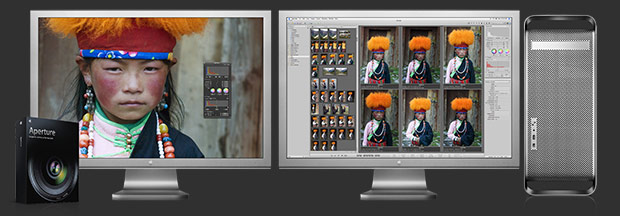
Apple has revealed that the next release of Aperture, the company's pro photo workflow application, will be about more than just support for Macs using Intel processors. During a press briefing yesterday at the PMA 2006 trade show in Orlando, Florida, Aperture product manager Joe Schorr showed off numerous refinements in the upcoming v1.1, including what appears to be much-improved processing of RAW files, as well as greater control over contrast, sharpening and noise reduction during the RAW conversion.

Aperture @ Apple
Rob Galbraithe review

Monday, February 27, 2006

Photographers and Copyright Laws in Flux


There is a proposed amendment to the Copyright Act which will make it easy for copyrighted work to be used with no concern for copyright. It is ridiculous in my opinion, and one of the largest pro-photographer groups (the ASMP) is doing what it can to stop it from being signed into law. Basically, it says (quoting from the ASMP website) "a person or other entity who wants to use a copyrighted work is required to make only a "good faith, reasonably diligent search" to locate the copyright owner. If, after making such a search, the user is unable to locate the copyright owner, he/she/it gets an almost free license to use the work."

The Copyright Office Report

The ASMP call to action to send a letter to your lawmakers as well as a longer description

Carolyn E. Wright, Esq., of the Law Office of Carolyn E. Wright, LLC, is an attorney specializing in legal assistance for photographers. Here is her Blog

Friday, February 24, 2006

Robert Adams: Landscapes of Harmony and Dissonance


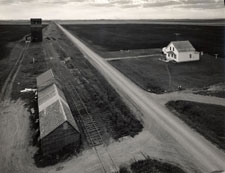
For more than 40 years, Robert Adams (born 1937) has photographed the landscape of the American West, particularly in California, Oregon, and his home state of Colorado. His work is inspired both by his joy in the inherent beauty of the landscape, and his dismay at its exploitation and degradation for residential and commercial development.

In his images of main streets, tract houses, trees, and waterways, Adams records two kinds of landscapes, one damaged by people and the other somehow beyond their power to harm. He asks us, through his photographs, to consider where we live and how we relate to our environment.

Getty Announcement

New York Times Review

Los Angeles Times Review

Tuesday, February 21, 2006

New large format Canon printer due in April


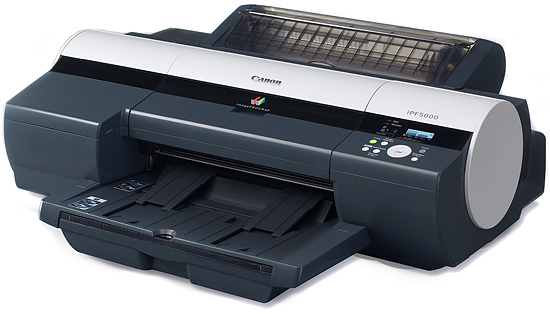
Canon U.S.A has introduced the 12-color imagePROGRAF iPF5000 pigment ink large format printer that sports a new Lucia inkset features red, blue, green, gray, photo gray, cyan, photo cyan, magenta, photo magenta, yellow, regular black, and matte black pigmented inks.

The printer loads all 12 ink tanks at once and utilizes automatic switching between regular black and matte black, helping to eliminate wasted ink and time swapping out ink tanks, according to Tod Pike, senior vice president, Imaging Systems Group, Canon U.S.A. The imagePROGRAF iPF5000 model uses Canon’s new dual print head design that has a total of 30,720 ink nozzles. The iPF5000 printer employs 2,560 nozzles per color for a maximum resolution of 2400×1200 dpi (dots per inch) and a four picoliter droplet size.

READ ON

Rob Galbraithe Review

Monday, February 20, 2006

Crane & Co. Museo Silver Rag


by Pete Myers @ Luminous Landscape

Suggesting a new fine art photography paper to photographers is likely akin to discussing religion — every one has an opinion — and what works for one, likely does not work for others.

Nevertheless, a new fine art paper, Crane & Co. Museo Silver Rag, is entering the market, with a release date of late February 2006, coinciding with this year’s Photo Marketing Association (PMA) show. As a beta tester of this paper, and in chorus with many of my fellow beta testers, we have come to regard Museo Silver Rag with true endearment. Why the enthusiasm for a new paper, in a market choked with paper choices?

READ ON

Friday, February 17, 2006

A Big Sale Spurs Talk of a Photography Gold Rush


By RANDY KENNEDY @ New York Times

Photography has had "it" moments before — times when the comfortingly concrete facts of the marketplace signaled to curators, dealers and photographers that the medium had finally arrived, fully embraced by the world of fine art and serious collecting.

In 1981, a huge print of Ansel Adams's famous "Moonrise, Hernandez, New Mexico" sold in Los Angeles for $71,500 — at the time the highest price ever paid for a photograph, and an even more stunning figure because Adams was still alive at the time.

Records have continued to be broken steadily. But until last year, when a contemporary photograph by Richard Prince sold for $1.2 million at Christie's, no single print had ever broken the six-figure barrier at auction. So when Sotheby's announced this week that "The Pond — Moonlight," a platinum print by Edward Steichen owned by the Metropolitan Museum of Art, had sold for almost $3 million to an anonymous buyer, it was as if continents had shifted in the photography world.
READ ON

Thursday, February 16, 2006

An exhibition of John Szarkowski at MoMa


John Szarkowski: Photographs is the first retrospective of the esteemed photographer’s work. The exhibition features Szarkowski’s early photographs—beginning with pictures of his native Midwest dating from 1943 and continuing through his acceptance of a curatorial post at The Museum of Modern Art in 1962—as well as his later works, many of which were made around his farm in upstate New York.

MoMa LISTING

His music as images


By Christopher Reynolds @ LA Times

In a bid to step beyond the shadow of Graham Nash, the singer-songwriter, Graham Nash, the photography collector, and Graham Nash, the photo-technology innovator, an emerging photographer has unveiled his first major museum show at San Diego's Museum of Photographic Arts. His name is Graham Nash.

Or as the artist/musician/collector/entrepreneur puts it, "It's just me, trying to shoot off my mouth." The show, titled "Eye to Eye," includes 80 images and runs through April 30.

'Eye to Eye' is Graham Nash's first major museum photo exhibit.

READ ON

Wednesday, February 15, 2006

Adobe Lightroom Beta II


Project: Lightroom is Adobe’s effort to engage the professional photography community in a new way, giving you the opportunity to kick the tires and shape the feature set of a new tool being created just for you. Ultimately, we want Lightroom to be truly built from the ground up by photographers, for photographers, helping solve your unique workflow challenges.

ADOBE INFO/DOWNLOAD PAGE

Monday, February 13, 2006

Storing Your Digital Images


By Vincent Bockaert @ DPreview.com

If you value your digital images, you should have a proper backup system in place. In this article, we will look at two storage methods and some backup tips so that you can enjoy your images not only in the short term, but also much further into the future.

Magnetic Storage - Hard disks

The building blocks of digital images are "bits", which can either be "zero" or "one". Magnetic storage devices such as hard disks distinguish a "one" from a "zero" by changing the magnetic properties of the disk in that location. The great thing about hard disks is that their capacities are constantly increasing while prices are constantly dropping. Two hundred gigabyte (1) hard disks (3.5" IDE 7200rpm with 8 MB cache) currently retail under US$100. Such hard disks can hold about 70,000 six megapixel JPEG or 23,000 six megapixel uncompressed RAW images. That's about 700 JPEG or 230 RAW images per dollar.

READ ON

Friday, February 10, 2006

Unfrozen in time


The daguerreotype is back
This has been a bleak year for conventional photography. On January 12th, Nikon announced that it would no longer make most film cameras. A week later, Konica Minolta said it was quitting the camera business. These developments follow last year's bankruptcy filing by AgfaPhoto and Kodak's decision to stop making black and white paper.

Digital is clearly king, and the silver-gelatin process that dominated photography for more than a century is in its death throes. Such evolution is natural; the daguerreotype, the tintype, the salted-paper prints that peaked during the 19th century all melted away, as better or cheaper forms arose. But photographic progress has not pleased everyone—and some artists are reviving the antique tools of their trade. Long exposures and cumbersome equipment are back. The movement's leading lights include, for example, Mark Osterman and France Scully Osterman, whose Rochester studio specialises in collodion, a process that was abandoned in the 1880s and involves a syrupy liquid poured on to a glass plate.

READ ON

Wednesday, February 08, 2006

the history of digital, fine art printing


by Harald Johnson
While artists have been using computers to create and even output images for decades, things didn't really take off until two groups on opposite sides of the U.S. started to put their attentions on a new way of imagemaking.

In 1980, Jon Cone, who was educated and trained as a traditional fine-art printmaker and who owned an art gallery in New York City's SoHo district, founded an experimental and collaborative printmaking studio in the waterfront town of Port Chester, New York. There, from 1980 to 1984, printmaker Cone worked with artists in the media of silkscreen, intaglio, relief, monoprint, and photogravure.

READ ON

Biology and the Bauhaus


By Peter Anker @ TATE, ETC.
LĂ¡szlĂ³ Moholy-Nagy moved to London in 1935 and quickly established himself (along with Walter Gropius) at the heart of the avant-garde community in the newly designed Lawn Road Flats of London's leafy Hampstead. He brought with him his belief in the importance of "nature as a constructional model" to determine functionality in art and design, and his vision to "add to the politico-social a biological bill of rights"...

READ ON

Part II "The Gesamtwerker"

'Josef Albers and LĂ¡szlĂ³ Moholy-Nagy: From the Bauhaus to the New World', sponsored by BMW (UK) Ltd, Tate Modern, 9 March - 4 June. Josef Albers and LĂ¡szlĂ³ Moholy-Nagy: From the Bauhaus to the New World, with texts by Achim Borchardt-Hume,

Tuesday, February 07, 2006

Fiddling With Lens as a City Burned


By CAROL KINO @ New York Times
SOON after Oct. 17, 1989, I stood on a hill in San Francisco, watching as my apartment and all my worldly possessions burned to the ground in the aftermath of the Loma Prieta earthquake. A photographer had already captured me for posterity, sobbing as I saw the smoldering rubble of my building for the first time, and for a while, photographers seemed to attend my and my neighbors' every move, whether we were scavenging the remains of our building or waiting in Red Cross lines.

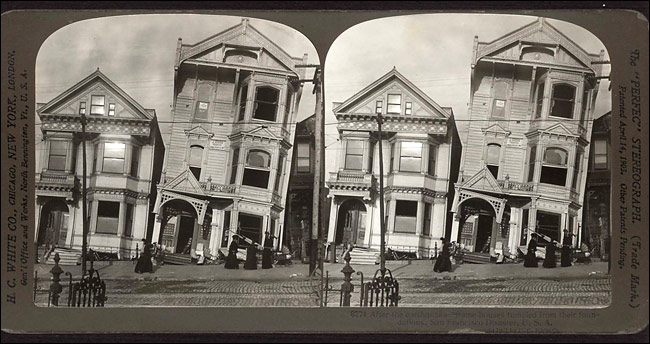
The earthquake had effectively wiped away our collective history, but at times I had the weird sense that another sort of history had sprung to life. Our travails seemed to parallel events that I had seen many times before, in photographs of the great San Francisco earthquake of 1906. As it turns out, my sense of déjà vu was right: that quake, a 7.8 temblor that left the city burning for four days, is considered to have been the world's first widely photographed disaster.

READ ON

Monday, February 06, 2006

The Scanner Photography Project


I ran across this site today and found it pretty interesting. Michael Golembewski has been creating his own digital cameras for years by combining a scanner and a large format camera. His latest camera combines a Horseman 450L monorail 4x5 camera with an extensively modified Canon LIDE 20 "from which I have reomved the lamp, pinhole lens assembly, and CIS sensor housing. I've made the scanner light-tight using duct tape and putty, covered with a hefty dose of black spraypaint. It might look crude, but it works very nicely. I've attached a modified lens board directly onto the scanner, so it can easily be connected to the Horseman. The lens board attachment holds the scanner optics at the same level as a ground glass plate. This allows me to compose and focus shots on the ground glass, instead of with preview scans - it's much faster. I have two lenses that I use with this model - a Kompur lens from 1915, and a found 8x10 enlarger lens".

Adobe Mactel Software: Not Until 2007?


Adobe Systems on Wednesday said it has no plans to re-release its current applications as Universal binaries that can run natively on both Intel- and PowerPC-based systems, and instead will focus on delivering native support for Intel Macs along with the next major versions of its software.

APPLEINSIDER.COM

PUBLISH.COM

Friday, February 03, 2006

Photoshop Killer Tips


Produced by the National Association of Photoshop Professionals (NAPP). This site hosts a variety of tips and tricks for photoshop users that can either be viewed as quicktime movies immediately or subscribe to the video podcasts via iTunes. Hey, it's all free!

PHOTOSHOP KILLER TIPS

Thursday, February 02, 2006

Color Management tools compared


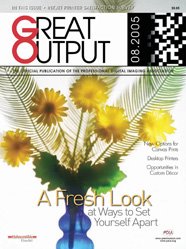
"A Closer Look" is an article written by Dan Reid for Great Output magazine. It is a very good comparison between the most commonly used monitor calibration and profiling systems examining key differences between ColorVision Spyder 2, GretagMacbeth Eye-One, Monaco Optix XR, and ColorEyes Display. If you are just getting started or a serious digital printer this is a must read.

Published 2005

"A Closer Look" by Dan Reid (PDF format)

Tuesday, January 31, 2006

Farewell Nam June Paik


At his best, Mr. Paik exaggerated and subverted accepted notions about both the culture and the technology of television while immersing viewers in its visual beauty and exposing something deeply irrational at its center. He presciently coined the term "electronic superhighway" in 1974, grasping the essence of global communications and seeing the possibilities of technologies that were barely born. He usually did this while managing to be both palatable and subversive. In recent years, Mr. Paik's enormous American flags, made from dozens of sleek monitors whose synchronized patterns mixed everything from pinups to apple pie at high, almost subliminal velocity, could be found in museums and corporate lobbies.

Mr. Paik was affiliated in the 1960's with the anti-art movement Fluxus, and also deserves to be seen as an aesthetic innovator on a par with the choreographer Merce Cunningham and the composer John Cage. Yet in many ways he was simply the most Pop of the Pop artists. His work borrowed directly from the culture at large, reworked its most pervasive medium and gave back something that was both familiar and otherworldly.

NEW YORK TIMES

Monday, January 30, 2006

Print Permanence; An Epson White Paper


How long will a photographic print last? There is no simple answer. But it is important for anyone who cares about their photos to have a base understanding of the factors that affect the longevity of prints to make informed decisions and insure those photographic prints will last an expected time.

This white paper deals with the complex subject of print permanence and how knowledge of industry-accepted comparative print permanence testing can lead to the best decisions about buying or specifying imaging products. Every bit as important, this document will help the reader detect potentially misleading marketing claims about photographic image quality, print permanence and the limitations of universal compatibility.

SHUTTERBUG

QPict 7 Public Beta


One of the more attractive Macintosh asset managers gets a public beta featuring improved Raw handling and DNG support.
Rune Lindman Development has released Preview 3 of its public beta of QPict 7, its Macintosh asset management software. This version features native DNG support, embedded IPTC data in JPEGs and exports and several bug fixes. Previous previews implemented improved Raw format support, covering over 200 cameras, as well as improved color reproduction of Raw images.

While not QPict 7 is still a work in progress, Lindman notes, "some of our key customers are already using QPict 7 in production and they found it to be very stable except for a small number of known problems."

QPICT SITE

Friday, January 27, 2006

No charge for Aperture Universal Binary crossgrade


Apple has abandoned their plan to charge current Aperture owners a fee to obtain the Universal Binary version of the application. Earlier this month, the company had said it would be US$49 to "crossgrade" from the PowerPC version of the program - which will not run on Macs with Intel processors - to the Universal Binary version, which is compatible with both PowerPC Mac and Intel Mac architectures.

Now, the Aperture product page on the online Apple Store web site states:

A Universal version of Aperture, which will run natively on both PowerPC- and Intel-based Mac computers, will be available before the end of March 2006. New and existing owners of Aperture will be able to crossgrade to the Universal version at no additional charge via Software Update.

While the page describing Rosetta, the technology built into the operating system of Intel-based Macs, says:

Universal versions will be available by March 31, 2006. New and existing owners of Final Cut Studio or Logic Pro can crossgrade for $49. Logic Express owners can crossgrade for $29. Aperture owners can crossgrade at no charge.
APPLE--> APERTURE

Wednesday, January 25, 2006

iTunes U


Customized portal media delivery. The question is how to manage content in the new iPod world. This could be the biggest server supplied media content providing source in the marketplace. Start with colleges and universities with a reservoir of content, add the ubiquitous iPod, control distribution of content, add the personal portal connection and you open all kinds of possibilities....

iTunes U

Fixamac to the rescue


"Having trouble printing in Mac OS X? Whatever your particular problem, Fixamac Software, Inc. may have a solution for you. We bring you the ultimate in printing software diagnostics and repair for Mac OS X 10.1.2 through Mac OS X 10.4.x. Print Center Repair was the first product in the world, designed exclusively for Mac OS X, to combat printing issues at a software level. Need a solution for Panther or Tiger? No problem. Printer Setup Repair is the evolution of the original design and is completely up to date with the latest technology."

Pretty good stuff! If you are having issues printing after upgrading your system or computer, this is a great tool.

Fixamac.net

It May Look Authentic; Here's How to Tell It Isn't


By NICHOLAS WADE @ New York Times

Among the many temptations of the digital age, photo-manipulation has proved particularly troublesome for science, and scientific journals are beginning to respond.

Some journal editors are considering adopting a test, in use at The Journal of Cell Biology, that could have caught the concocted images of the human embryonic stem cells made by Dr. Hwang Woo Suk.

At The Journal of Cell Biology, the test has revealed extensive manipulation of photos. Since 2002, when the test was put in place, 25 percent of all accepted manuscripts have had one or more illustrations that were manipulated in ways that violate the journal's guidelines, said Michael Rossner of Rockefeller University, the executive editor. The editor of the journal, Ira Mellman of Yale, said that most cases were resolved when the authors provided originals. "In 1 percent of the cases we find authors have engaged in fraud," he said.

The two editors recognized the likelihood that images were being improperly manipulated when the journal required all illustrations to be submitted in digital form. While reformatting illustrations submitted in the wrong format, Dr. Rossner realized that some authors had yielded to the temptation of Photoshop's image-changing tools to misrepresent the original data.

READ ON

Monday, January 23, 2006

Who Owns Seydou KeĂ¯ta?


By MICHAEL RIPS @ New York Times

EVEN by the elevated standard of the New York art world, the rumor was exceptional: a tin of negatives buried in Africa for three decades that, when opened, revealed the work of a photographer who was neither "outsider" nor "indigenous" but spectacularly modern. And so the bejeweled and bohemian showed up at the Gagosian Gallery the evening of Oct. 18, 1997, wearing Fulani bracelets beneath their Charvet cuffs, blouses referencing Matisse referencing North African fabrics, Xhosa men in dinner jackets.

As accustomed as they were to art-world rumors, as familiar as they had become with exaggerations in the photo market, they could not help but be impressed. They saw mural-size black-and-white portraits in which the intricate designs of tribal costumes were set against backdrops of arabesque and floral cloths, the subjects disappearing into dense patterning that suggested Vuillard. A number of the photographs sold immediately, at prices of up to $16,000, and by the end of the evening, many in the crowd stood childlike in front of their limousines, waiting to catch sight of the photographer whose images they would never forget.

He finally appeared, old and regal.

The show was uniformly well received. Margarett Loke, writing in The New York Times, described Seydou KeĂ¯ta as "the man who brought renewed vitality to the art of photographic portraiture." An article in Artforum praised the show, noting that the photographs "were very successful with sophisticated New Yorkers."

READ ON

Friday, January 20, 2006

Memorex Adds Gold Reflective Layer to CD-R/DVD-R Media


The Memorex new Pro Gold archival CD and DVD media are claimed to be the industry?s most durable optical media to retail, lasting up to six times longer than current discs.

Following the example of Mitsui and later of MAM-E, Memorex combines a 24-karat gold reflective layer, high performance dye and its DuraLayer scratch-resistant technology to create Memorex Pro Gold Archival CD and DVD discs. The discs raise come backed by a lifetime warranty, and will be the only gold archival media available at retail in the United States.

READ ON

Thursday, January 19, 2006

Optimizing Photoshop CS2 Performance


By Shangara Singh @ ExtremeTech

The hourglass in Windows and the watch and spinning beach ball in Mac OS are icons that most people would prefer not to see when working in Photoshop. Although eliminating them is not always possible, you can go some way toward doing that. You can do this by managing your resources wisely. To that end, it's worth spending a few minutes fine-tuning Photoshop to squeeze the maximum performance out of it.

READ ON

Konica Minolta throws in the towel


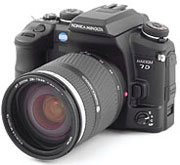
Not to be outdone by Nikon, who recently announced a nearly complete exit of the film-based camera business, Konica Minolta has just announced that they're pulling out of the camera biz altogether. The company announced that they were scaling back consumer operations in November, especially killing off their film line and mainly concentrating their DSLR line. Now they're ceasing operation altogether, along with ending their film and photo paper production. Sony will be continue to manufacture cameras compatible with Konica Minolta lenses, which furthers a partnership the two companies formed last year, and will receive some of Konica Minolta's DSLR related assets.

PRESS RELEASE

Wednesday, January 18, 2006

Paper Permanence And You


A Discussion With Three Authorities on Digital Paper and Longevity
By Amadou Diallo
Our story begins in China, 105 AD when Ts'ai Lun, an unheralded court official of the Han Dynasty, perfects a technique for turning wood pulp into the ultimate writing surface—paper. Almost two thousand years later, in the midst of a digital imaging revolution, photographers are faced with an overwhelming variety of specialty papers optimized for digital printing.

How does one wade through this sea of choices? Some will choose based on performance issues like color saturation, image detail, and ink load. Others are more concerned with aesthetic qualities such as thickness, brightness and surface texture. These characteristics can be easily and inexpensively observed with sample packs and a few test prints. For those with longevity as a primary concern, however, there are few readily accessible sources of information. “Long lasting,” “archival”, and “museum grade” all sound impressive but these are marketing terms with no quantifiable measure of performance to give them any real meaning.

READ ON

Tuesday, January 17, 2006

World's first 39MP DSLR


Hasselblad introduces the H2D-39 the world's first 39MP digital SLR and three 39MP digital camera backs.
The H2D-39 is based on Hasselblad's H2 camera. This high performance, shutter-based lens DSLR is compatible with the Hasselblad H System lenses and V camera lenses. Features include Digital APO Correction (DAC) and Instant Approval Architecture.
The CFH-39, CF-39 and CF-39MS (Multi Shot) are digital backs aimed at professional photographers and feature Hasselblad's i-Adaptor interchangeable camera interface. An optional Multi-Shot Module uses a multiple-exposure technique to increase the colour resolution in a studio environment, producing moiré-free photos with a unique colour resolution.
Designed to match the design and functionality of the H2, the CHF-39 uses an H-system interface plate to mechanically attach to view cameras, while the flash sync connection triggers digital capture. Integration with the H2's power system enables the camera and CFH-39 digital back to be powered by the H2's Li-ion battery.
Found in the H2D-39 and three digital backs, Digital APO Correction (DAC) automatically corrects for colour aberrations with every photo taken, producing pictures of optimum quality and detail.
Christian Poulsen from Hasselblad comments: 'With the new 39 megapixel-based Hasselblad products we are confident that the outstanding image quality of the captured files… will substantially reduce the need for post-processing work and will be of significant benefit to our customers.'
As an alternative to previous colour management solutions, which often force professional photographers to use a specific profile, the new products include Hasselblad Natural Colour Solution. When used in conjunction with FlexColour imaging software, it is designed to produce accurate out-of-the-box colours, skin tones and gradations.
Hasselblad has developed a new raw file format, 3F RAW. Lossless image compression enables it to retain 33% less storage space and it can be converted into Adobe's Digital Negative (DNG) RAW format.

Hasselblad.com

Monday, January 16, 2006

Photographer With a Knack for Finding the Moment


By STEPHEN HOLDEN @ New York Times

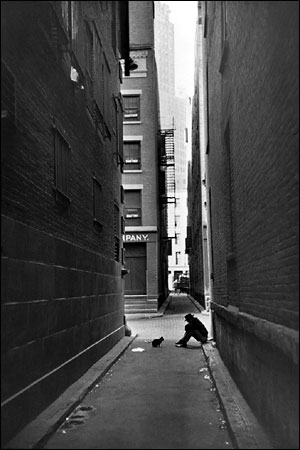
"Taking pictures means holding your breath with all your faculties concentrated on capturing a fleeting reality," declares the pioneering photojournalist Henri Cartier-Bresson near the end of Heinz Butler's austere documentary portrait, "Henri Cartier-Bresson: The Impassioned Eye."

In the small but stately film, completed a year before Cartier-Bresson's death at 95 in August 2004, he slowly leafs through volumes of his black-and-white photographs, shows some of his later drawings and muses on his art to the severe, prickly strains of Bach piano music. Even when viewed secondhand in a movie, these photographs are something to see. Their formal elegance is balanced by an intense, pulsing humanity. In all his photographs, Cartier-Bresson says, "geometry is the foundation."

The documentary, which subscribes to the Great Man school of reverential portraiture, is not a biography but an interview (in French, simultaneously translated into English) conceived as a master class on art appreciation, with guest commentators augmenting Cartier-Bresson's own sparsely chosen words.

A recurrent presence is the French actress Isabelle Huppert, who points to a portrait he took of her and says that it reveals a side of her personality she had never seen before. His pictures, she says, capture the "deep, mysterious bond between people and the things around them." But since the pictures speak so eloquently for themselves, her words are redundant.

READ ON

A CRITICAL HISTORY OF 20th CENTURY ART


by Donald Kuspit

Twentieth Century Art: An Overview of Critical Opinion

"The real problem of modernity is the problem of belief," writes Daniel Bell, the sociologist and political theorist. "To use an unfashionable term, it is a spiritual crisis, since the new anchorages have proved illusory and the old ones have become submerged. It is a situation which brings us back to nihilism; lacking a past or a future, there is only a void."(1) Modern art, in all its seemingless limitless variety, presents itself as one solution to the problem, indeed, as some think, the only important solution. As Bell says, it has become a "substitute for religion,"(2) a spiritual antidote to social poisons, the esthetic alternative to moral nihilism. This view is seconded by the historian Jacques Barzun, who, discussing "the rise of art as religion" in the 19th century -- initially the equation of art and religion, and finally the substitution of art for religion(3) -- remarks that "Art. . . became the gateway to the realm of spirit for all those over whom the old religions have lost their hold. Most romantic artists needed nothing higher. Art was sufficient and supreme."(4) The poet Wallace Stevens adds: "The paramount relation between poetry and painting today, between modern man and modern art, is simply this: that in an age in which disbelief is so profoundly prevalent or, if not disbelief, indifference to questions of belief, poetry and painting, and the arts in general, are, in their measure, a compensation for what has been lost."(5)
READ ON

Friday, January 13, 2006

Who Needs a White Cube These Days?


By ROBERTA SMITH @ New York Times

WHAT is art?" may be the art world's most relentlessly asked question. But a more pertinent one right now is, "What is an art gallery?"

It is heard often these days, and within it lies another question: do galleries have to run or look the way they do? How inevitable is the repeating cycle of solo and group exhibitions and the steady movement of artworks from galleries to museums, auction houses and collectors' homes? How can you slow, expose or disrupt the delivery mechanism - maybe even avoid it altogether occasionally - to reassert art as a process and a mind-set rather than a product?

With their changing exhibitions and precarious finances, galleries are by definition fluid forms, under constant revision. But lately the gallery model has seemed even more in flux than usual. More young dealers, artists and people who are both (or neither) are thinking outside the white cube. Other galleries are trying to brake their ascent to establishment status by interrupting the flow of monthly shows and finished objects, substituting a monthlong presentation of short exhibitions and even shorter performances.

READ ON

Thursday, January 12, 2006

California Dreaming on Such a Winter's Day


By RANDY KENNEDY @ New York Times
Winter, to put it politely, is not kind to Rochester. How many other cities, after all, are regularly in the running for the Golden Snowball, an annual award presented to the upstate city with the most snowfall? (Rochester, at 113 inches, was bested last winter only by Syracuse at 137.)

"It can be pretty bleak, let's be honest," said Anthony Bannon, director of George Eastman House, the renowned photography museum founded in the city in 1947. "There are times when it feels like you don't see the sun for months."

This was one of the reasons that a light bulb - actually more like a tanning lamp - went off over Mr. Bannon's head more than a year ago when he became familiar with an odd, obsessive experiment being conducted by a photographer named Robert Weingarten.

Mr. Weingarten, a former executive who took up a camera professionally at 54, travels around the world in search of images, and his work is now in the collections of several major museums. But in 2002, at the urging of Weston Naef, the photography curator at the J. Paul Getty Museum in Los Angeles, Mr. Weingarten decided to train his lens on his own backyard in Malibu, Calif., following Alfred Stieglitz's advice that photographers should first look for pictures at home before traveling to find them.

READ ON

Pantone monitor calibration


Pantone, which makes color accuracy systems, has a new device called Huey that will set your monitor to Pantone standards, which are often used by photo printers as well.

The device is a light sensor the size of a fountain pen. After it is attached to the monitor with suction cups, the included software displays bars of color. Huey reads the bars for accuracy, then adjusts the monitor. Once this is done, Huey goes into a stand on your desk to continuously check room lighting and adjust the screen settings.

Although it will be a boon to photo buffs, Huey, available next week for $89 at www.pantone.com, could also be helpful to online shoppers. Pantone says 85 percent of online retailers use its system to set image colors, so Huey makes it more likely that the sweater you are considering will actually be the color you see

Nikon Plans to Stop Making Most Cameras That Use Film


By MARTIN FACKLER @ New York Times

TOKYO, Thursday, Jan. 12 - The Nikon Corporation, the Japanese camera maker, said Thursday that it would stop making most of its film cameras and lenses in order to focus on digital cameras.

The company, based in Tokyo, is the latest to join an industrywide shift toward digital photography, which has exploded in popularity. Rivals like Kodak and Canon have already shifted most of their camera production into digital products.

Nikon said it would halt production of all but two of its seven film cameras and would also stop making most lenses for those cameras. The company will halt production of the film camera models "one by one," though it refused to specify when.

A company spokesman said Nikon made the decision because sales of film cameras have plunged. In the most recent fiscal year ended March 2005, Nikon said that film camera bodies accounted for 3 percent of the 180 billion yen ($1.5 billion) in sales at the company's camera and imaging division. That is down from 16 percent the previous year.

By contrast, sales of digital cameras have soared, the company said, jumping to 75 percent of total sales in the year ended March 2005, from 47 percent three years earlier. Scanners and other products account for the remainder of the division's sales.

"The market for film cameras has been shrinking dramatically," the company spokesman, Akira Abe, said. "Digital cameras have become the norm."

Mr. Abe said the announcement might trigger a brief revival in sales of film cameras, as film photography buffs rush to buy the cameras before production stops. The decision may also help make film cameras a popular nostalgia item in second-hand markets like eBay.

Nikon made its first film camera in 1948, as Japan rose from the ashes of defeat in World War II.

The quality and durability of Nikon's film cameras made them popular for decades among amateurs and professionals alike, turning Nikon into one of the industry's best-known brands. The first Nikon cameras arrived in the United States in the 1950's when American servicemen started bringing them home from tours of duty at American bases in Japan.

But in recent years, all brands of film cameras have virtually disappeared from store shelves.

Digital photography has won out because its images are visible immediately and are easily stored on tiny computer chips, eliminating the need to carry and develop clunky rolls of film.
Wednesday, January 11, 2006

Do Burned CDs Have a Short Life Span?


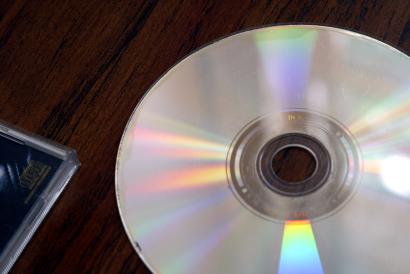
Opinions vary on how to preserve data on digital storage media, such as optical CDs and DVDs. Kurt Gerecke, a physicist and storage expert at IBM Deutschland, has his own view: If you want to avoid having to burn new CDs every few years, use magnetic tapes to store all your pictures, videos and songs for a lifetime.

"Unlike pressed original CDs, burned CDs have a relatively short life span of between two to five years, depending on the quality of the CD," Gerecke says. "There are a few things you can do to extend the life of a burned CD, like keeping the disc in a cool, dark space, but not a whole lot more."

READ ON

Tuesday, January 10, 2006

When a Museum Building Competes With Art


By RANDY KENNEDY @ New York Times

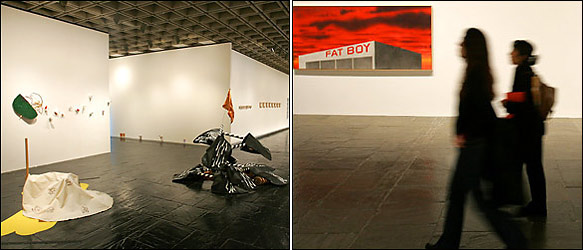
When Marcel Breuer was planning his brooding Whitney Museum building on Madison Avenue in the early 1960's, he was adamant about creating a space where art could hold its own. His first priority for the interior, he wrote, was the "simplicity and background-character of the gallery spaces, with the visitors' attention reserved to the exhibits."

But curators and artists have nonetheless sometimes found themselves wrestling with the relentless Brutalist grid of Breuer's ceiling and the grid echoed below by the split-slate floors. One day several months ago, the artist Richard Tuttle and David Kiehl, a Whitney curator, paced around the museum's third floor planning the artist's retrospective, which opened last November. Mr. Tuttle - whose art can seem delicate enough to evaporate under a viewer's gaze - was worried about his work being overpowered by the ceiling and the floor.

READ ON

Monday, January 09, 2006

New logo for Kodak


CES 2006: As part of a wide ranging speech at CES by Kodak Chariman and CEO Antonio Perez it was revealed that Kodak will be saying goodbye to their famous yellow-box logo in favour of a simpiler more contemporary design. The new logo also features a new typeface with more rounded letters. According to Perez,"This introduction is the latest step in the company’s broad brand transformation effort, which reflects the multi-industry, digital imaging leader Kodak has become."

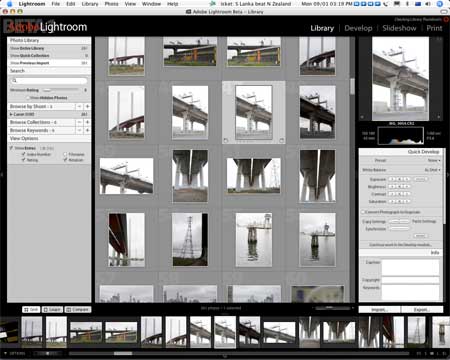
First Look: Adobe Lightroom beta


By Derrick Story @ MacWorld
The first impulse most photographers will have is to compare Adobe’s just announced Lightroom to Aperture, Apple’s pro level photo app. And well they should. We may have a real clash of the titans on our hands here.

Adobe promotes Lightroom as “the efficient new way for professional photographers to import, select, develop, and showcase large volumes of digital images.” Unlike Photoshop—Adobe’s image-editing application that must serve many masters, including graphic artists and Web designs—Lightroom is aimed squarely at photographers. That said, Photoshop complements Lightroom when there’s a heavy image-editing task to handle. And Lightroom makes it easy to open a picture in Photoshop. Generally speaking, though, the tools in Photoshop that photographers need most of the time exist right within Lightroom.
READ ON

Adobe Labs and the information they provide. LABS SITE
A Luminous Landscape review by Michael Reichmann

Comments by Martin Orpen on his blog
A review by Wayne j. Crosshall at Dimagemaker as well
And an article on the developmental history at Photoshop News.com

Saturday, January 07, 2006

Conceptual Artist as Vandal: Walk Tall and Carry a Little Hammer (or Ax)


By ALAN RIDING @ New York Times
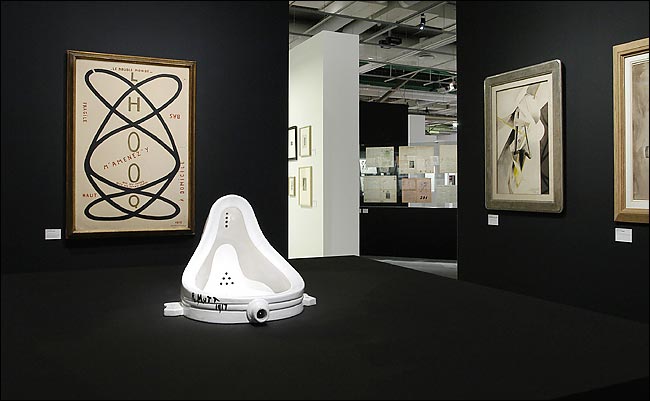
PARIS, Jan. 6 - The Dada movement made its name in the early 20th century by trying to destroy the conventional notion of art. Taking literal inspiration from their exploits this week, a latter-day neo-Dadaist took a small hammer to Marcel Duchamp's "Fountain," the factory-made urinal that is considered the cornerstone of Conceptual Art.

The assailant, a French performance artist named Pierre Pinoncelli, was immediately arrested after his act of vandalism, which took place on Wednesday, during the final days of the "Dada" exhibition at the Pompidou Center. The porcelain urinal was slightly chipped in the attack and was withdrawn to be restored. (The exhibition runs through Monday.)

Mr. Pinoncelli, 77, who urinated into the same urinal and struck it with a hammer in a show in Nîmes in 1993, has a long record of organizing bizarre happenings. Police officials said he again called his action a work of art, a tribute to Duchamp and other Dada artists.
READ ON

Friday, January 06, 2006

Apple's Aperture Tricks


Aperture Tricks is the blog for people who use Apple's Aperture Photo software. AT provides a place for people to share Aperture news, tips and tricks. Anyone who's interested in Aperture is welcome to participate. Due to problems with comment spam, we require all comments, tips and tricks to be sent via email to aperturetricks at aol.com. Search this site using Google Search, located at the very bottom of the page.
GO TO SITE

Thursday, January 05, 2006

Rocks of ages


Jonathan Jones @ The Guardian
The path is a wet green line across the frosted field. Someone else walked this way this morning, looked at the same view of mountains suspended in the distant mist, and perhaps, as I do, mistook the telephone wires in the frozen sky for a vapour trail. Here in the Welsh hills, the art gallery I visited in London just before Christmas seems a long way off.
But then, it must seem a long way off to Richard Long, too, when he is walking across some far-flung desert. When I saw his exhibition he was around, somewhere, finishing a mud drawing, but all I saw of the artist was a pair of shoes removed and neatly placed on the ground while he splashed wet mud on the walls and moved about chunks of mossy tree bark. I feel closer to him here, in the cold white field that bows upward like a tarpaulin filled by a gust of wind, than I did in the gallery. Maybe the best way to review a walking artist is to take a walk.
READ ON

Wednesday, January 04, 2006

Final Cut 6 to usher in new video editing era for Apple


January 4, 2006 - Apple is preparing to make a huge splash at the National Association of Broadcasters trade show this year, Think Secret has learned. Preliminary information from sources suggests that Apple will take advantage of the April show to demonstrate Final Cut Pro 6 to the public for the first time. Even more significant, Apple will use the stage to unveil Final Cut Extreme, an extremely high-end version of its video editing software designed to grab marketshare away from rival Avid.

Sources note that Apple's Final Cut Extreme announcement will coincide with Red's upcoming 4K digital cinema camera, a revolutionary piece of equipment that is said will be priced upwards of $200,000. Pricing for Final Cut Extreme is said to be similarly up-market, approaching $10,000 a seed, and will require the latest hardware from Apple.

READ ON

Tuesday, January 03, 2006

What 8,500 Pictures Are Worth


By PHILIP GEFTER @ New York Times
LAST year, when the Metropolitan Museum of Art acquired the more than 8,500 photographs in the Gilman Paper Company Collection - then arguably the most impressive private photography collection in existence - Malcolm Daniel, the museum's curator of photography, declared it "the most important thing" that had happened to his department in the history of the museum. "For at least the last 15 years, the acquisition of the Gilman collection has been our No. 1 priority and goal," he said.

And when the Museum of Modern Art acquired the Thomas Walther collection of high-modernist photography, in 2001, Peter Galassi, the Modern's chief curator of photography, said, "His collection splendidly demonstrates the importance of photographic modernism and simultaneously encourages us to rewrite its history."

READ ON